

Skip to main navigation Skip to main content Skip to page footer
Good to know

Creatine goes mainstream

Opportunities for innovative product concepts

Creatine is currently one of the hottest topics in the field of functional ingredients. While it has long been established primarily in performance and strength sports, creatine is now increasingly found in everyday foods such as yogurt, snacks, and powdered beverages. As a result, interest in this ingredient is growing well beyond the traditional sports community – including in the areas of healthy aging, recovery, lifestyle, mental performance, and gaming.

In this issue of our newsletter, we’re shining the spotlight on this potent ingredient and telling you why you absolutely should stop by our booth at Vitafoods 2026 in Barcelona.

Creatine as a source of energy for muscles

Creatine is a naturally occurring, low-molecular-weight compound that is primarily stored in the muscles. There, it plays a central role in energy metabolism: Creatine supports the rapid release of energy during short-term, intense physical exertion.

Your body produces creatine itself from the amino acids glycine, arginine, and methionine – primarily in the kidneys, liver, and pancreas. Additionally, creatine is obtained through diet, particularly from meat and fish.

However, with the growing trend toward functional foods, more and more products are now coming onto the market that contain added synthetically produced creatine: for example, protein puddings, drinkable yogurts, powdered beverages, or snack products. Synthetically produced creatine monohydrate is usually used for this purpose.

Why creatine is so popular right now

The growing popularity of creatine can be attributed to several factors:

  • Rising demand for functional foods and supplements
  • A trend toward high-protein and performance-enhancing products
  • Increasing interest in healthy aging and muscle health
  • Social media buzz surrounding creatine, particularly on TikTok, Instagram, and LinkedIn
  • New target groups such as gamers, best agers, and lifestyle-oriented consumers

Scientific evaluation

What are the effects of creatine?

Creatine is one of the most extensively studied ingredients in sports nutrition. Its effects are particularly well-documented scientifically in the context of strength training.

For this reason, there are currently two approved health claims for creatine:

  • Creatine increases physical performance during explosive strength training as part of short-term, high-intensity physical activity.
  • Daily intake of creatine can enhance the effects of strength training on muscle strength in adults over 55 years of age.

To make use of these health claims, a daily intake of 3 g of creatine must be ensured. 

Creatine and cognitive performance

In addition to athletic performance, another area is currently gaining attention: the potential effects of creatine on concentration, memory, and mental performance.

Initial studies provide interesting evidence in this regard; however, the European Food Safety Authority (EFSA) has not yet approved any health claims in this area. It currently considers the available data to be insufficient.

Creatine and healthy aging

Recent studies are increasingly examining potential positive effects on brain health, mood, and the aging process – far beyond the well-known benefits for strength and performance. These studies provided initial evidence that creatine may help people over 65 counteract age-related muscle loss (sarcopenia), particularly when combined with adequate protein intake, good hydration, and regular strength training two to three times a week.

According to initial studies, creatine is also said to be a valuable aid for women: especially after menopause, when estrogen levels drop, it is believed to help maintain muscle and bone health.
Regulatory classification in the EU

When using creatine on the European market, the legal situation must be clearly taken into account. Not all creatine compounds are approved: compounds such as creatine malate or creatine alpha-ketoglutarate are considered unapproved novel foods and may not be used.

Creatine monohydrate, on the other hand, is classified as non-novel in the Novel Food Catalogue and is therefore marketable. Furthermore, a large portion of scientific studies is based on this form, which is why it is considered particularly well-researched. The German Nutrition Society considers a daily intake of up to 5 g of creatine monohydrate to be safe.

Product concepts with creatine

In our view, creatine offers a wide range of applications – particularly in powder formulations, but also in capsules and tablets.

In solid dosage forms, creatine is often used as a single ingredient. Due to its technological properties, tablets require suitable excipients. To meet the requirements for health claims, typical daily doses consist of several units. Powder products are more flexible in this regard and allow for combination with other functional ingredients.

Our new product in this category: Raspberry Rocket

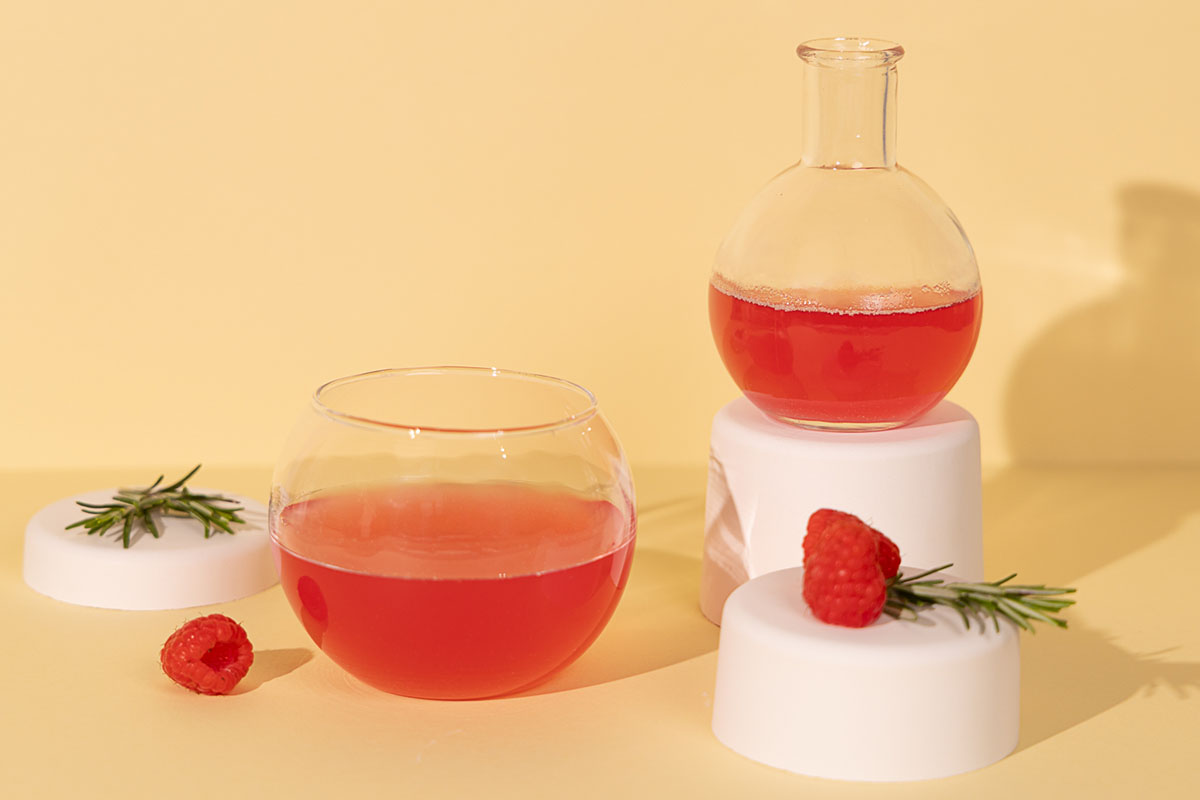
An example of a creatine powder product is our trade show concept for this year, “Raspberry Rocket,” which we will be presenting at Vitafoods 2026 in Barcelona. The formula combines:

  • Creatine
  • Essential amino acids
  • Magnesium
  • Vitamin B6

A product concept that targets physical performance as well as recovery and mental resilience. Magnesium and vitamin B6 contribute important health claims in the areas of physical and mental performance.

More about Raspberry Rocket

More product ideas with creatine

In addition to Raspberry Rocket, we also develop other custom product concepts featuring creatine. How about, for example, a …

  • Recovery drink with creatine, whey protein, and L-glutamine
  • Gaming booster with creatine, taurine, caffeine, green tea extract, ginseng root extract, and B vitamins

Are you planning a product with creatine? Then feel free to contact us. Together, we’ll develop the perfect formula.

A new concept for joint health:
Magic Melt

In addition to Raspberry Rocket, we are also presenting our new “Magic Melt” concept at Vitafoods. These berry-flavored lozenges melt directly on the tongue, releasing the innovative cucumber fruit extract Q-Actin™.

Q-Actin™ is a 100% natural active ingredient that strengthens the joints and supports their mobility. Extracted from selected cucumbers (Cucumis sativus L.) with a particularly high ido-BR1 content, Q-Actin™ helps promote joint function.

More about Magic Melt

Visit us at Vitafoods 2026 in Barcelona at booth 4B2. And try our two product concepts right there on the spot.

More about Vitafoods