
Ingredients | Trends |
Ube as the next superfood and
beverage trend
The purple yam is taking Europe by storm
Very few raw ingredients make the leap from a regional speciality to an international trend. Following in the footsteps of matcha, ube is now one of these exceptions. This deep purple tuber originates from the Philippines, where it has been used as a traditional foodstuff for centuries. Whilst ube has long been established in South-East Asia, the Western world is now also discovering this root for use in drinks, snacks, desserts and dietary supplements.
What exactly is ube?
Ube is a purple yam (Dioscorea alata) that is often mistaken for purple sweet potatoes. Botanically, however, the two plants are not related. Ube is characterised by its vibrant colour, which comes from natural anthocyanins, and its unique flavour.
Thanks to social media, interest in ube is currently growing far beyond the Philippines, driving up demand for the ingredient on the international food market.

The taste of ube: What does purple yam
taste like?
The flavour of ube is difficult to describe using a single aroma. Consumers and food experts therefore often compare it to a combination of vanilla, pistachio, coconut, white chocolate and subtle nutty notes.
Unlike matcha, ube has no bitter or grassy undertones. This makes the root particularly appealing to consumers who prefer mild and sweet, creamy flavour profiles.
Is ube healthy?
The ube root naturally contains various beneficial compounds. These include dietary fibre, vitamins, minerals and antioxidants (or: anthocyanins). Anthocyanins are natural plant pigments that also give blueberries and blackcurrants their intense colour. Furthermore, ube is gluten-free, vegan and caffeine-free.
Ube powder as a trendy ingredient for product concepts
In Europe, the fresh tuber has so far been used only rarely. Instead, ube powder is predominantly used. With its natural purple colour and ease of measurement, it offers a wide range of applications for innovative clean-label concepts.
This makes it possible to combine product concepts in the functional food sector, as well as smoothies, protein products and dietary supplements, perfectly with this trendy ingredient.
Ube drink: the new star alongside the
matcha latte?
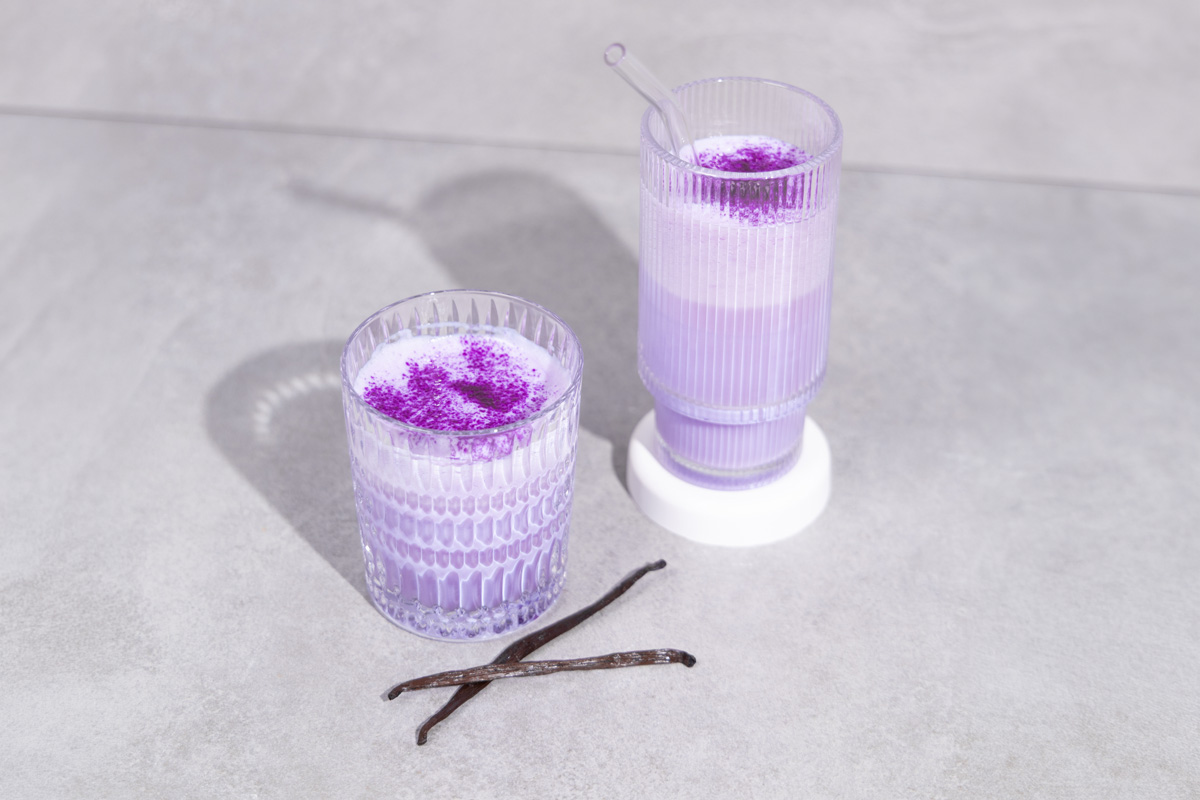
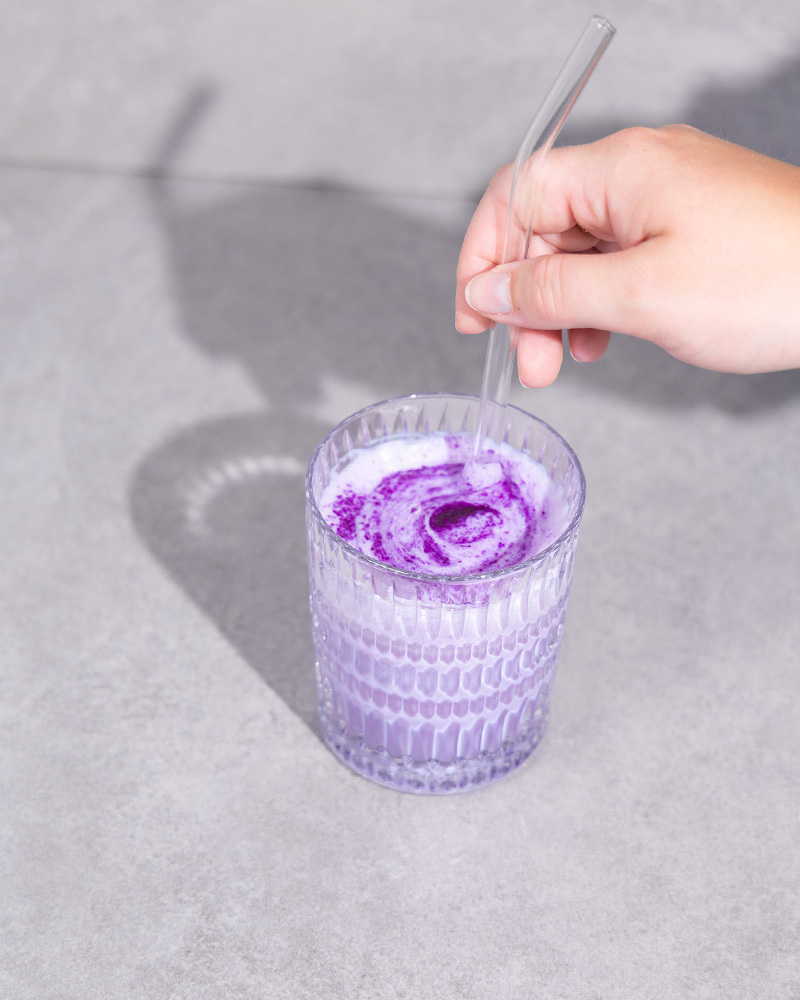
The biggest craze at the moment is undoubtedly the ube drink: whether it’s an ube latte, an ube iced drink or an ube smoothie – you see that vibrant purple colour everywhere on social media platforms.
As a contract manufacturer, we see huge potential here for your next white-label product concept: how about a limited edition protein shake? Or a new functional beverage concept?
Criticism of the Ube hype
Why sustainability must be taken into account
Where major trends emerge, there are often critical voices too. This is equally true of ube. In the Philippines in particular, there is debate about the impact of rising global demand on existing farming structures. Experts point out that sudden spikes in demand can alter traditional farming systems.
There is also another important aspect: ube is mainly grown in the Philippines, but increasingly in countries such as Vietnam and China as well. For the European market, this means long transport routes and a correspondingly higher carbon footprint compared with regionally available raw materials.
The Federal Centre for Nutrition therefore points out that ube should be viewed in a nuanced way from a sustainability perspective.

Conclusion
More than just a social media hype?
Ube combines many of the characteristics that have made modern food trends so successful in recent years: striking colour, a pleasant taste, a strong social media presence, versatility in use, and a fascinating story rooted in Filipino culture.
At the same time, however, the current hype also highlights the importance of responsible sourcing and transparent supply chains. As your full-service partner, we continuously monitor new ingredient trends and maintain close contact with international suppliers, producers and industry partners. This enables us to assess opportunities and challenges at an early stage, identify suitable sources of supply and transform product ideas into marketable concepts.
For brands looking to embrace innovative raw materials at an early stage, ube therefore offers enormous potential. The key will be to view the trend not merely as a visual highlight, but as an opportunity to create unique and credible product concepts.