
Skip to main navigation Skip to main content Skip to page footer
Good to know

Natural colourings in dietary supplements

How we combine colour, flavour and stability

Topics such as ‘clean label’, natural colourings and colour-giving foods are currently right at the top of the wish list in many enquiries we receive regarding dietary supplements. In product development, this raises the key questions: How do we ensure the product retains its colour? How do we prevent off-flavours? And how do we ensure the powder doesn’t clump?

In this article, we’ll show you what natural colours and colouring foods are available and which solutions have proven effective in practice.

Why natural dyes are more
in demand than ever

Consumers today pay much closer attention to what products are dyed with. At the same time, the demands placed on manufacturers are increasing: products should look natural, be visually appealing and be technically feasible to produce.

This is what natural colourings look like in our white-label product concepts

We regularly develop market-ready concepts using natural colourings and colour-imparting foods.

The following examples show that natural colourings can now be used in a wide variety of product forms – provided that the formulation, raw materials and processing are considered as a whole.

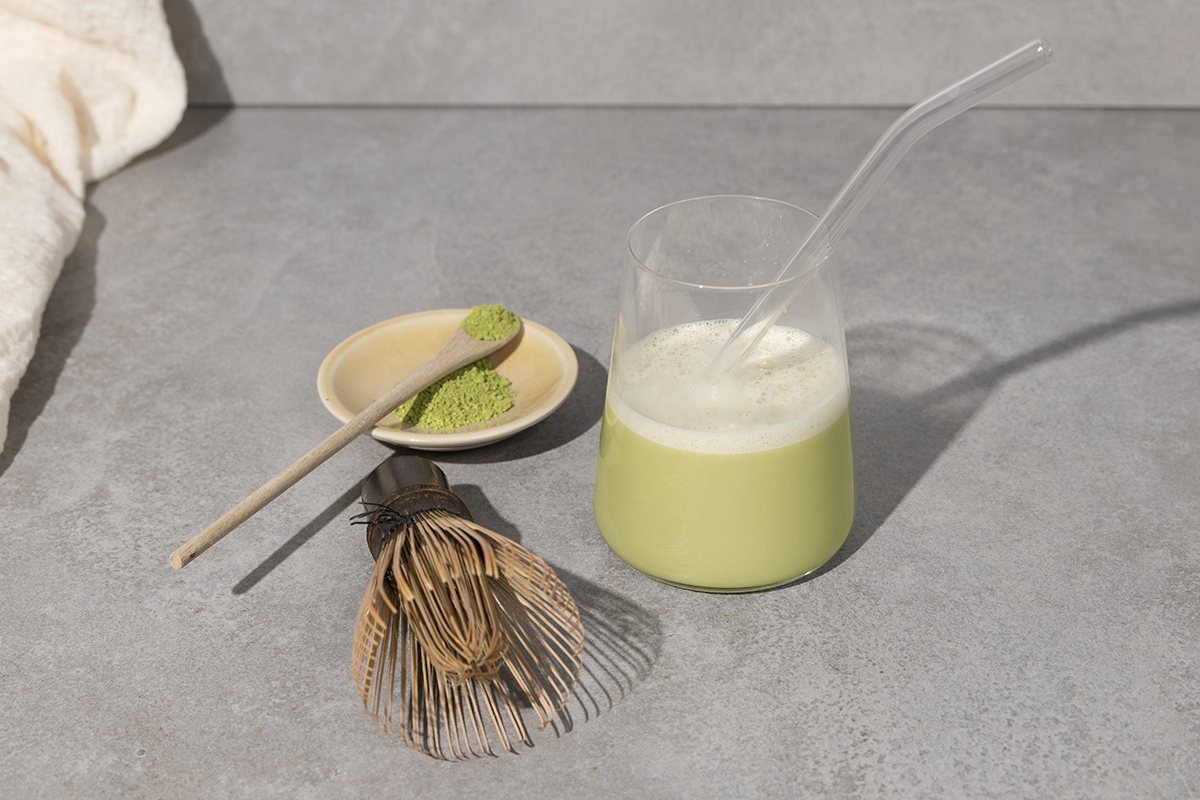
  • Fibre drink with matcha: naturally green in colour.
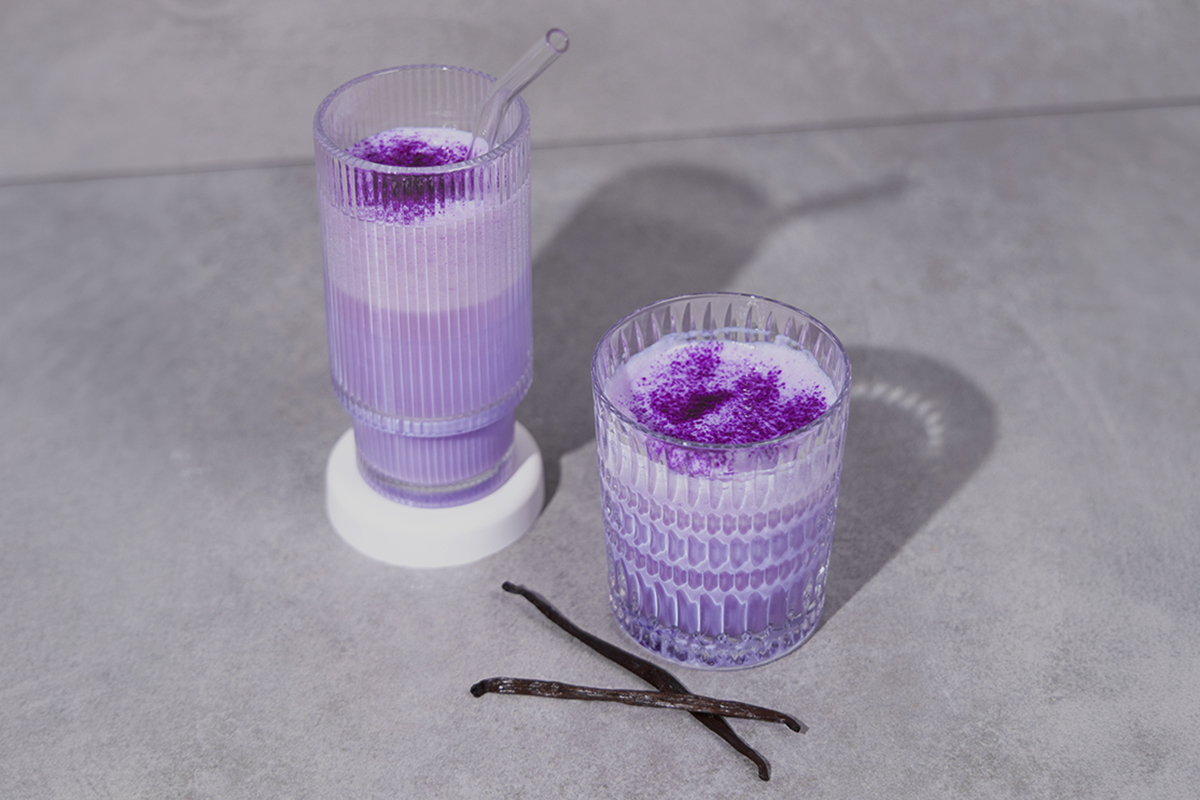
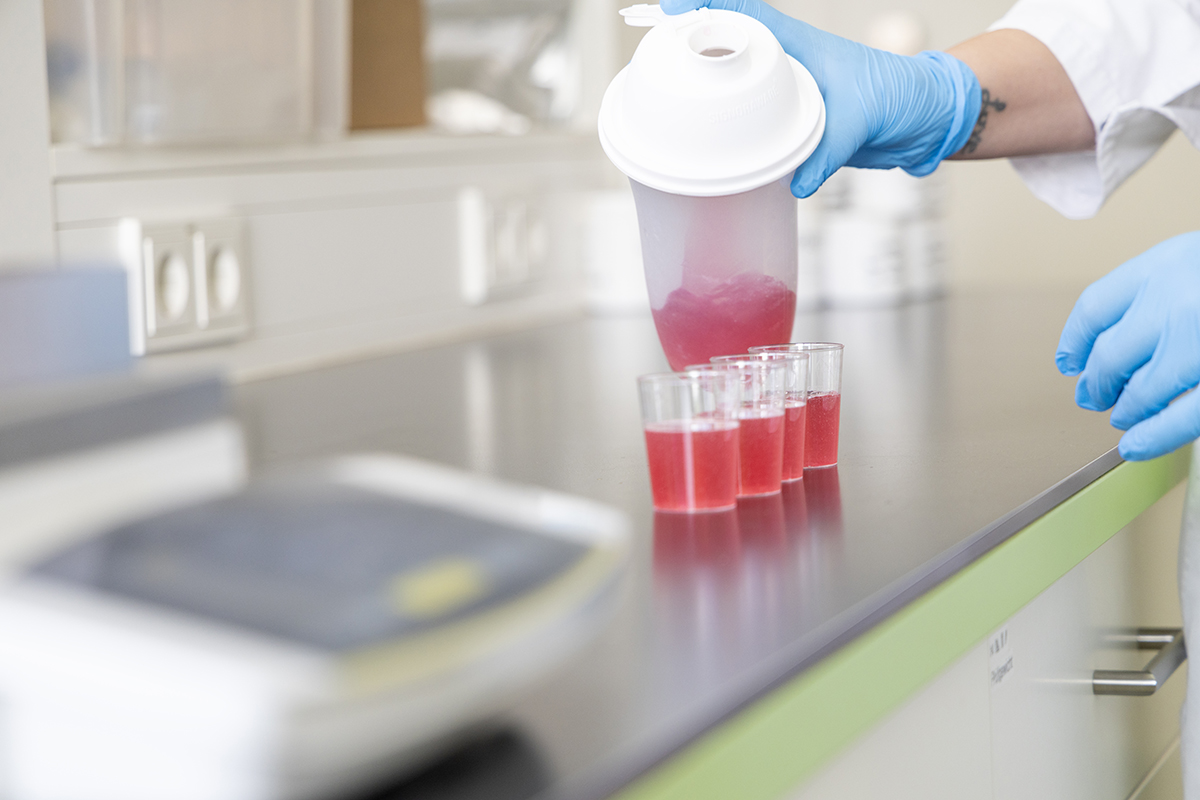
  • Blueberry-vanilla casein drink with ube: an intense purple colour to match the flavour.
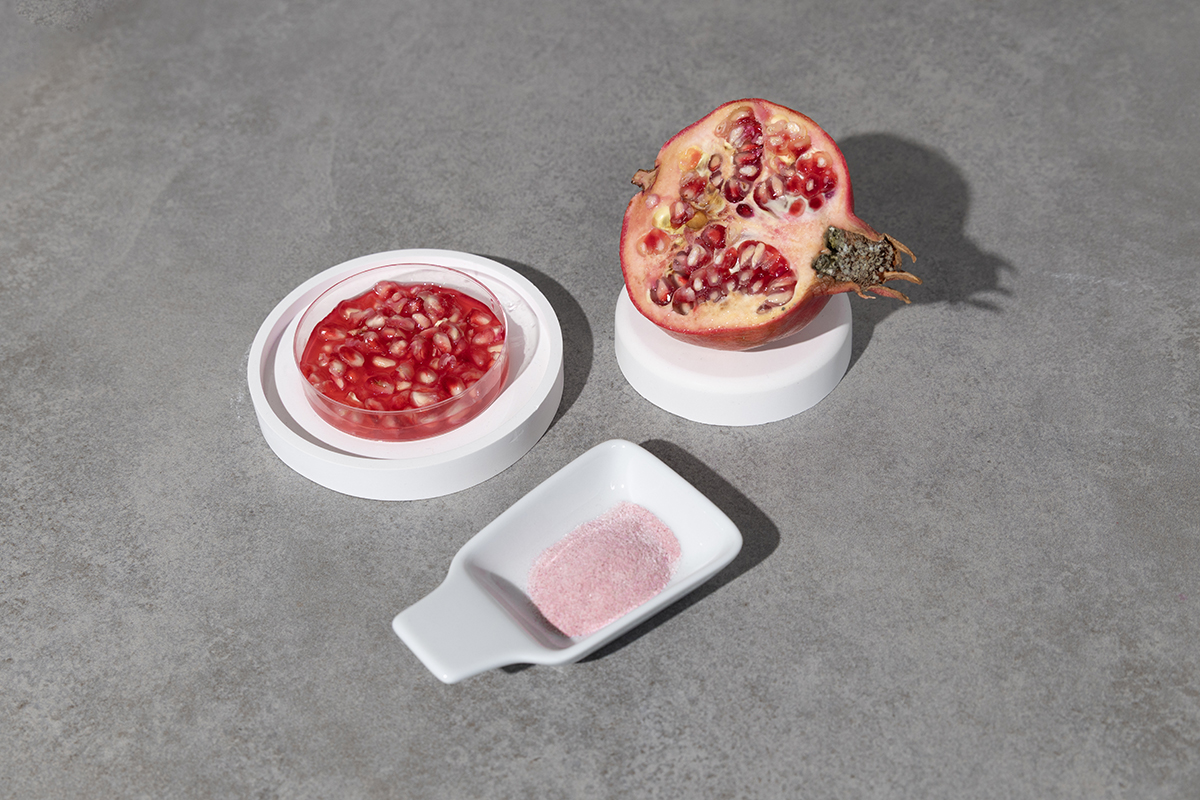
  • Pomegranate iron stick: coloured with beetroot powder.
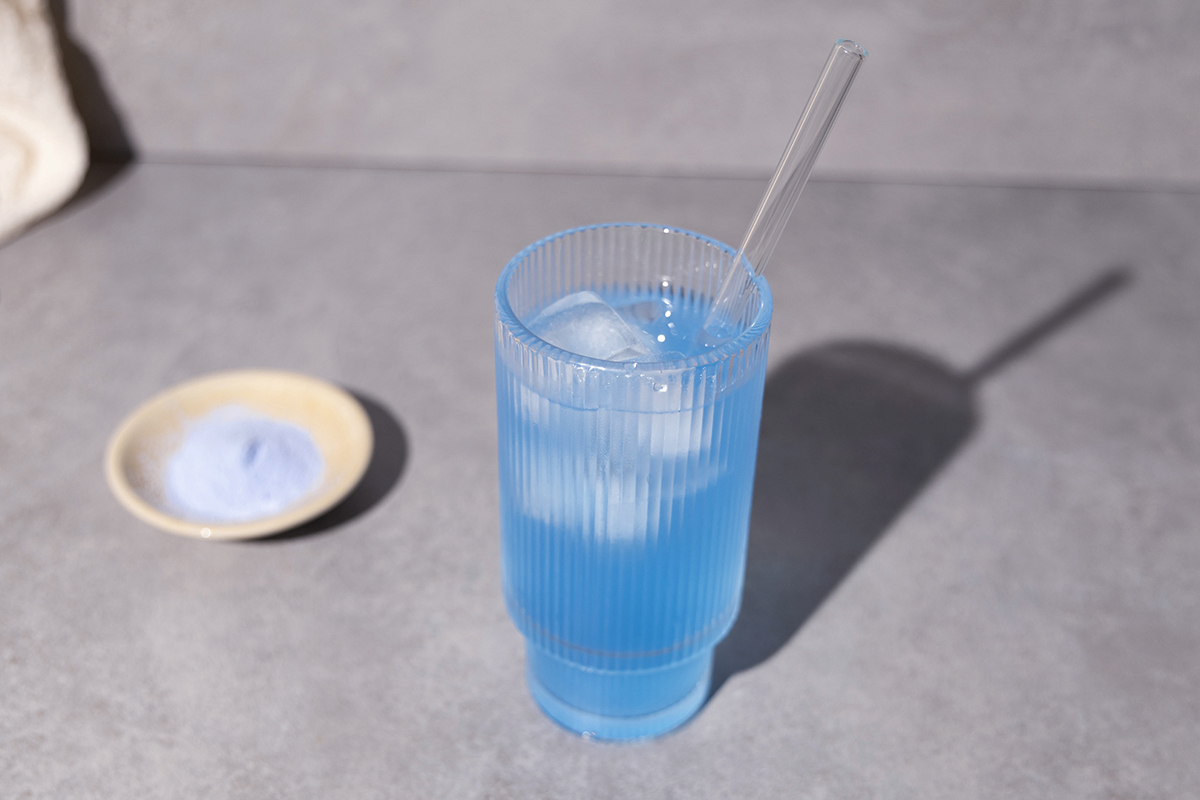
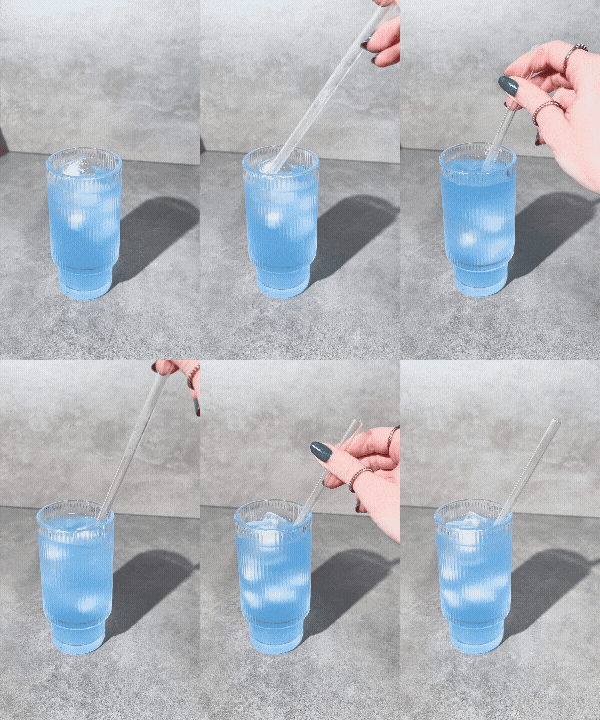
  • Blue Rush sports drink (berry and pineapple): natural energy in an eye-catching blue.
  • Vitamin B complex lozenges, lime and yuzu: created using a combination of naturally colouring foods.

Enquire now with no obligation

Natural colourings or foodstuffs that impart colour

What is the difference?

Natural colourings:

  • Production: Concentrated extracts of a single substance
  • Labelling: Usually with an E number
  • Examples: Curcumin (E100), beta-carotene (E160a), chlorophyll (E140)

Colouring foods:

  • Production: Made from plants, fruits, etc. by pressing, drying or grinding
  • Labelling: No E number, often ‘clean label’
  • Examples: Matcha, blue spirulina, ube, beetroot

Why colour is more than just aesthetics

A product often tastes good even before you’ve tried it. After all, when people talk about a berry drink, they usually automatically expect it to look red or purple. Lemon is immediately associated with yellow, and kiwi with green. These colour associations therefore influence the recognition of flavour, the perception of sweetness and acidity, and the product’s overall appeal.

At the same time, many brands deliberately use unusual colours – such as a bold blue – to make their products stand out more on the shelf or on social media.
Our practical solutions

We work with these natural dyes and colouring foods

Depending on the flavour, dosage form and product matrix, we use a variety of raw materials. Here is an overview:

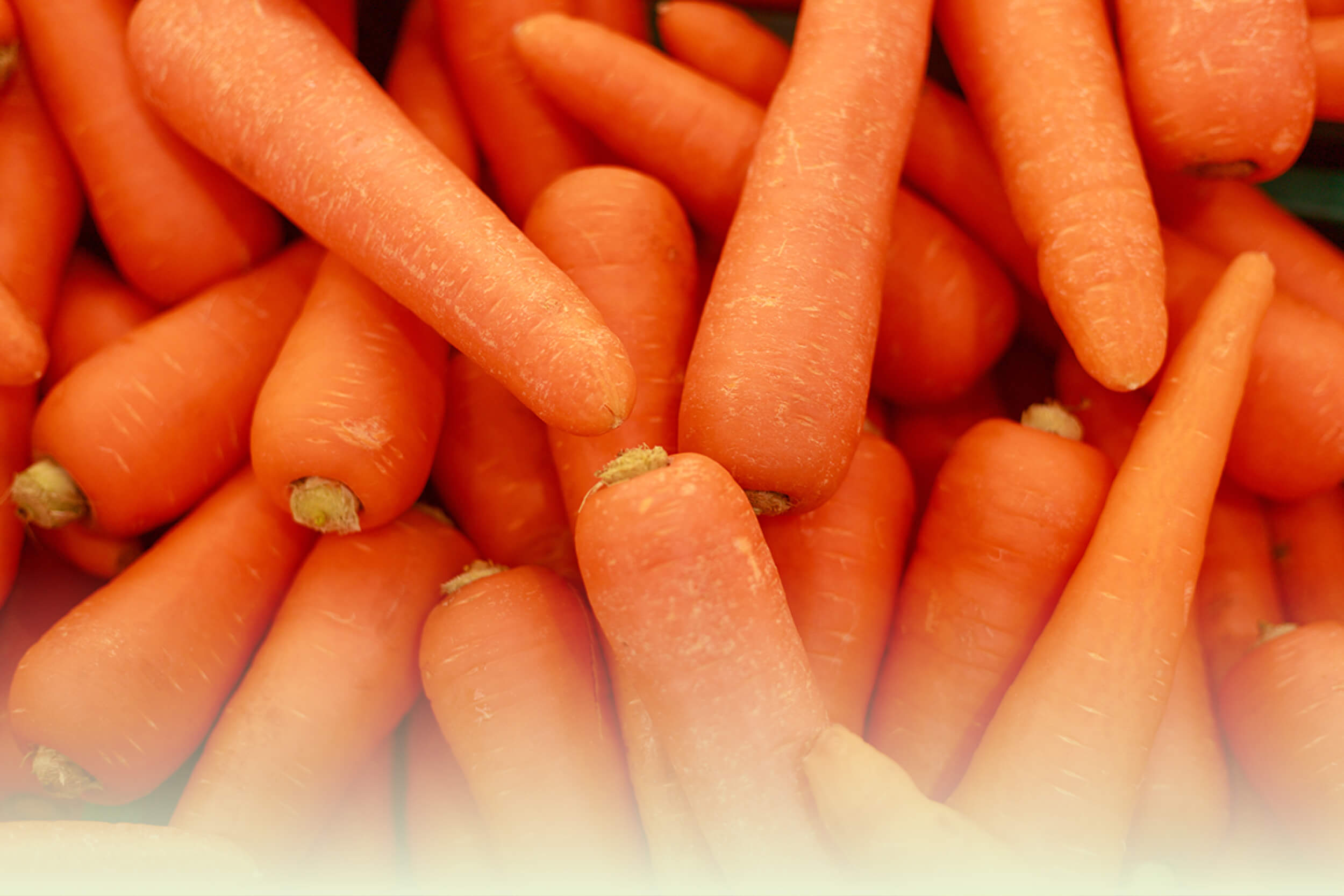
Beta-caroteneBeta-Carotin aus Karotten

Beta-carotene

Beta-carotene (also known as provitamin A) is a precursor to vitamin A found in various types of fruit and vegetables. Beta-carotene is used as a natural yellow to orange colouring agent in food. For example, it is used to colour products with vanilla, lemon or orange flavourings.
BeetrootRote Beete in Scheiben

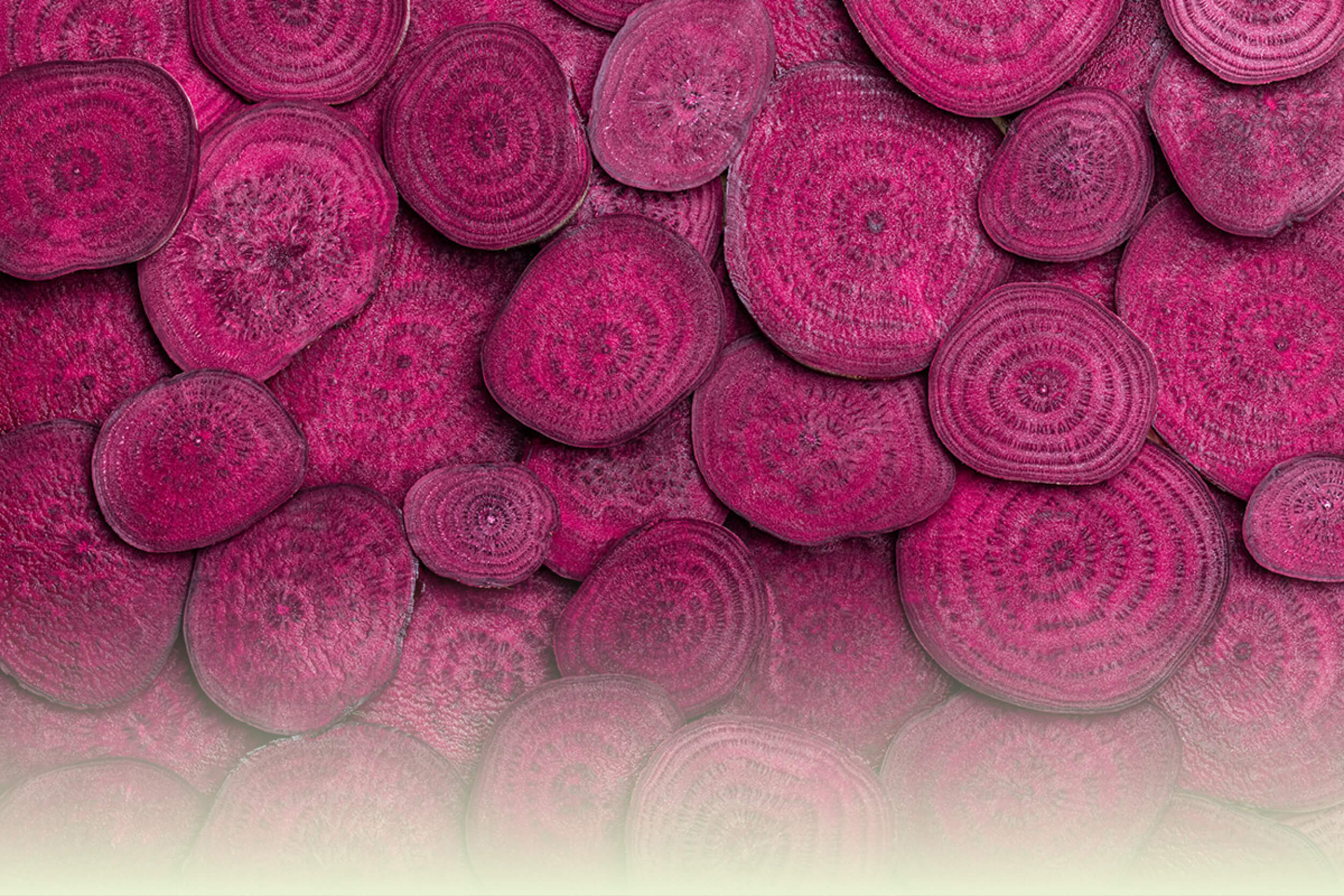
Beetroot

Beetroot is a plant whose root is red on the inside. When processed into juice or powder, beetroot can be used as a natural colouring agent. It is well suited to giving products with flavours such as red fruits, strawberry or pomegranate the right colour.
MatchaGrünes Matcha-Pulver

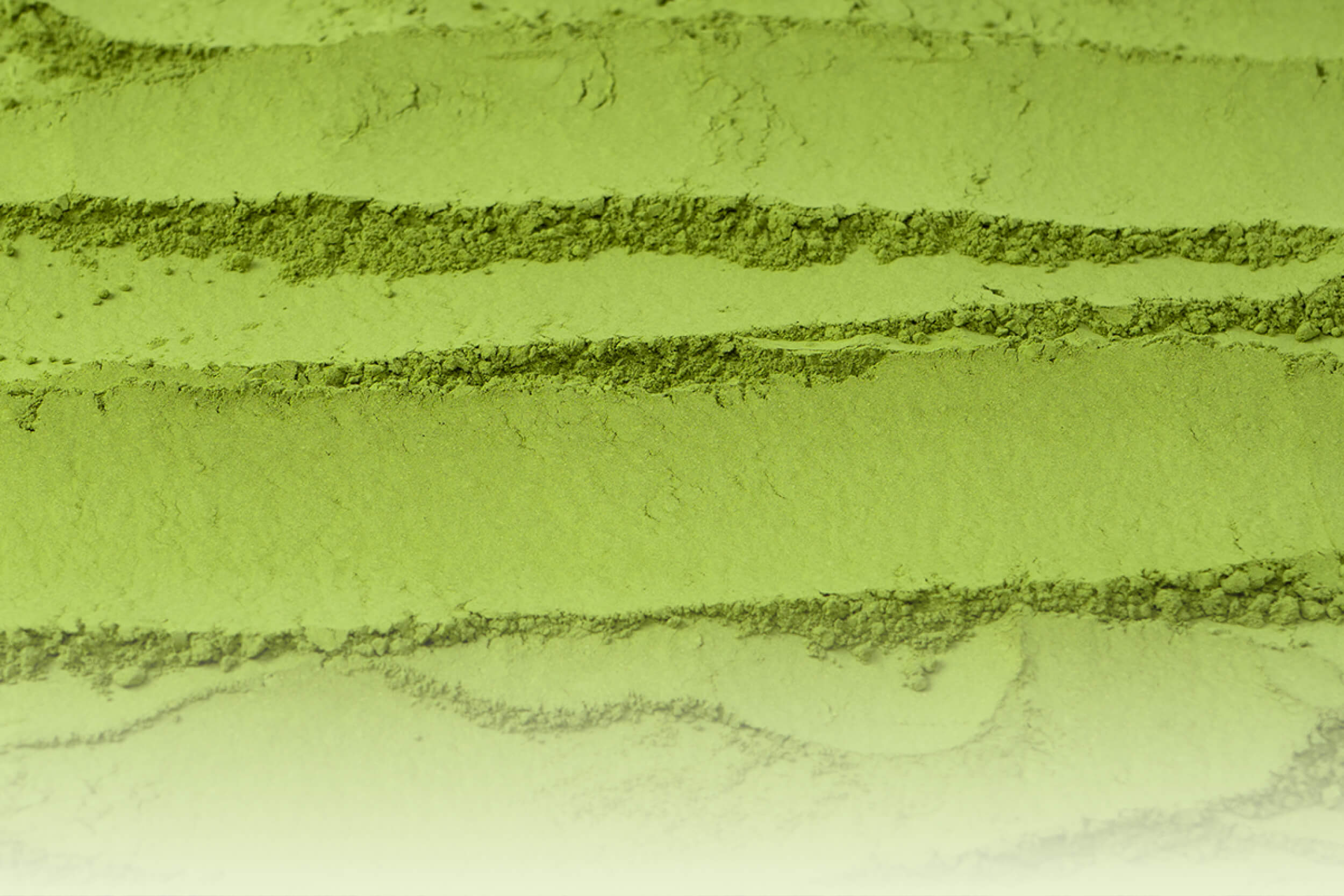
Matcha

Matcha, a ground green tea used in the Japanese tea ceremony, has been all the rage for years now. But this green tea powder isn’t just a hit for its flavour; matcha is also used as a natural colouring agent. Matcha can be used to achieve a pale green colour. It is therefore particularly suitable for colouring products with green apple, kiwi and pistachio flavours.
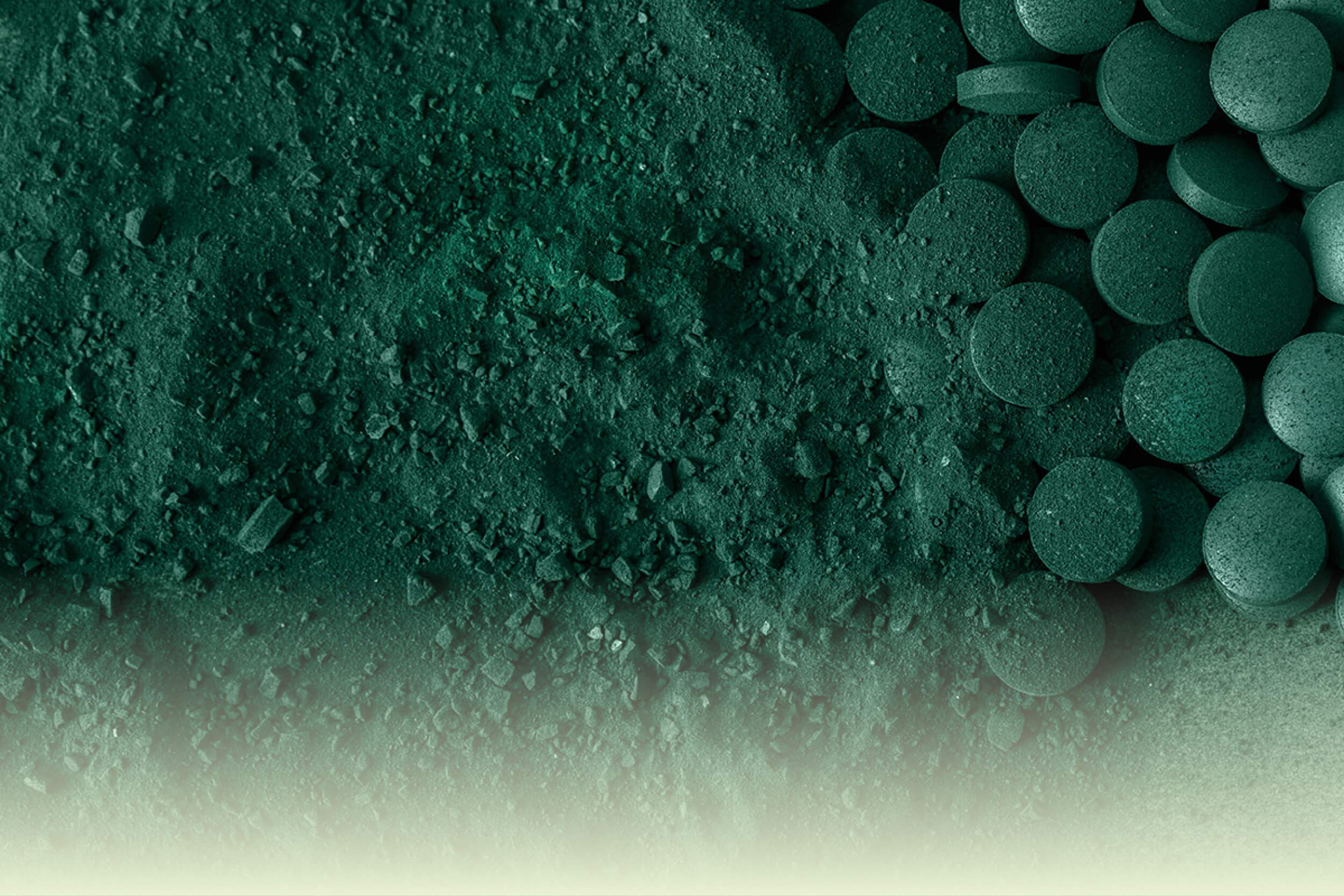
SpirulinaGrünes Spirulina-Pulver

Spirulina

Spirulina is derived from the cyanobacteria Arthrospira platensis or Arthrospira maxima. It is used as a green superfood in ‘Greens’ and is responsible for their colour. Its green hue is slightly darker than that of matcha.

As spirulina powder often forms suspended particles in water, the powder is not particularly suitable for colouring outside of ‘Greens’. Spirulina concentrates, on the other hand, are used, for example, in mixtures of naturally colouring foods.
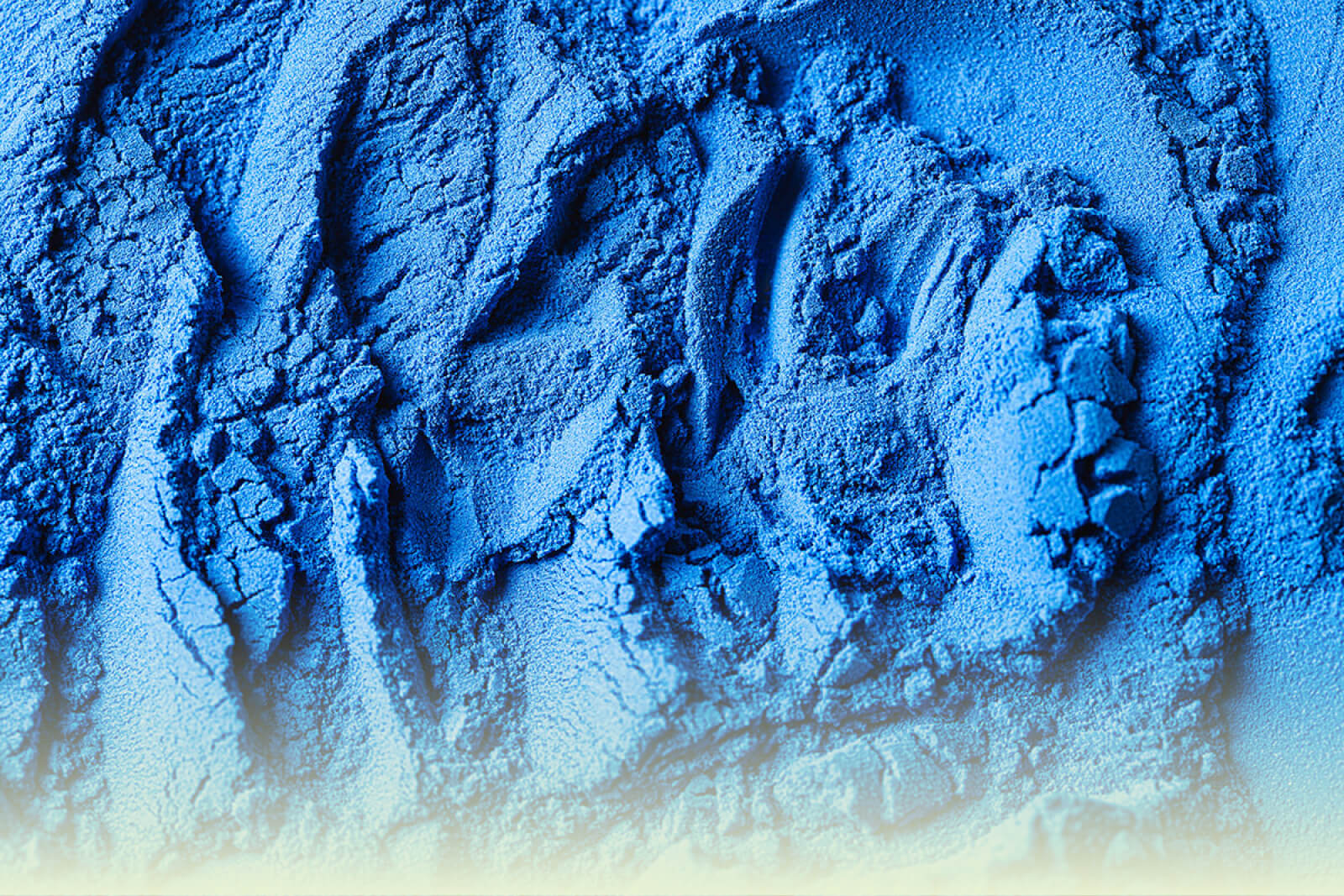
Blue spirulinaBlaues Spirulina-Pulver

Blue spirulina

Blue spirulina is also derived from Arthrospira platensis or Arthrospira maxima. Unlike green spirulina, however, it is not the whole microalgae that is used here; instead, the phycocyanin is specifically extracted. This gives the raw material its characteristic blue colour.
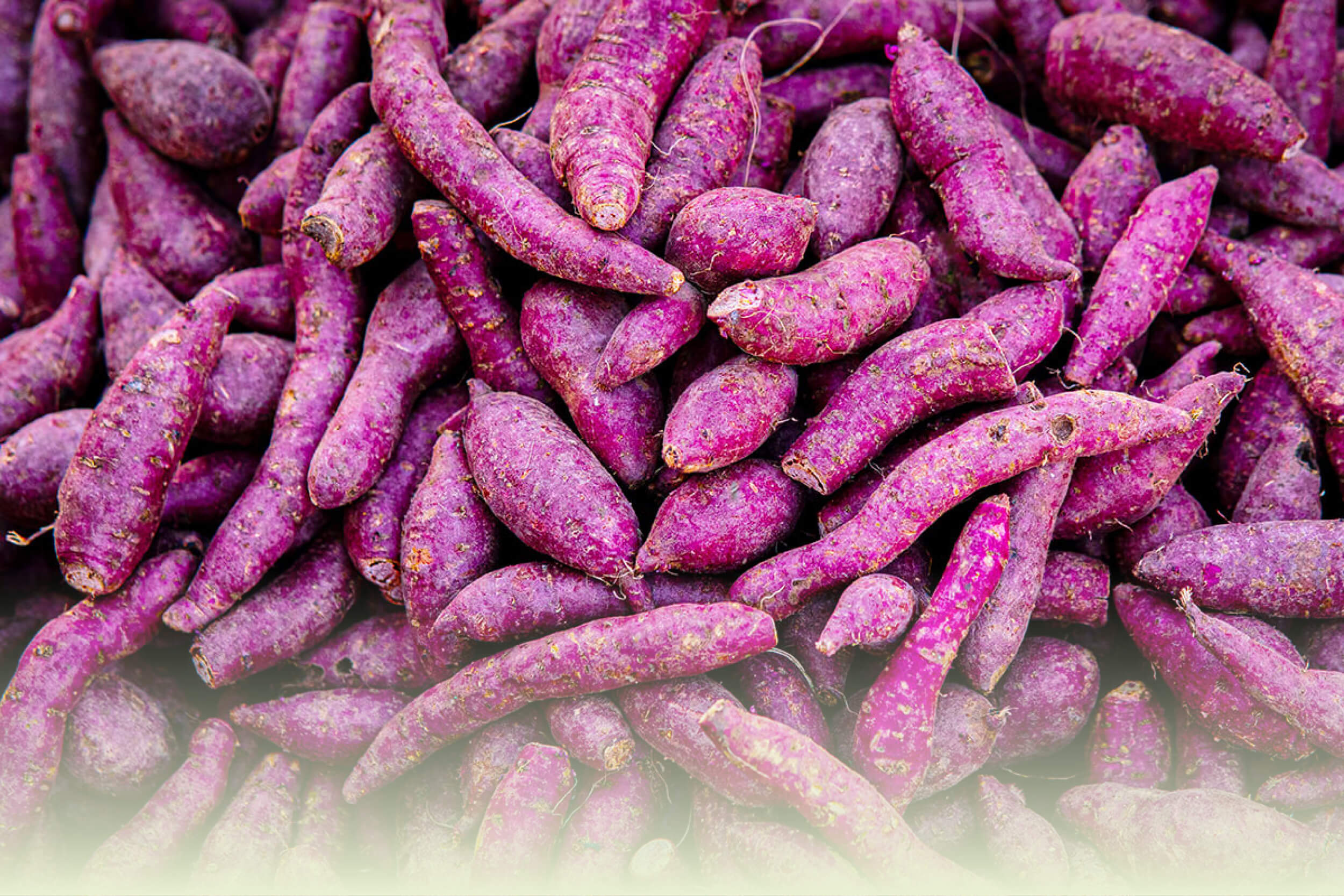
UbeUbe-Wurzeln auf einem Haufen

Ube

Ube is a purple yam from the Philippines and the latest food trend on social media. Ube is used, for example, in desserts, baked goods and drinks. Its colour ranges from blue to purple, due to the anthocyanins contained in the root. This makes ube ideal, for instance, for colouring products with a blueberry flavour.
Find out more about Ube

Mixtures of natural food colourings

Two examples of new, unique colour shades

Safflower concentrate + lemon concentrate:

  • Colour effect: Light yellow
  • Suitable flavours: Lemon, banana, elderberry

Carrot concentrate + blackcurrant:

  • Colour effect: Reddish
  • Suitable flavours: Cherry, raspberry, red fruits

Typical challenges following the choice of colour

Challenge 1:
The colour changes

Achieving exactly the right colour can be difficult, depending on the base matrix and the desired colour scheme. For example, some dyes are sensitive to pH levels, acidity, certain other ingredients or specific processing steps, amongst other factors.

Our solution

We test various variants right from the sample development stage: where necessary, we adjust the formulation, combine colourants, use alternative raw materials and optimise the product base.
Challenge 2:
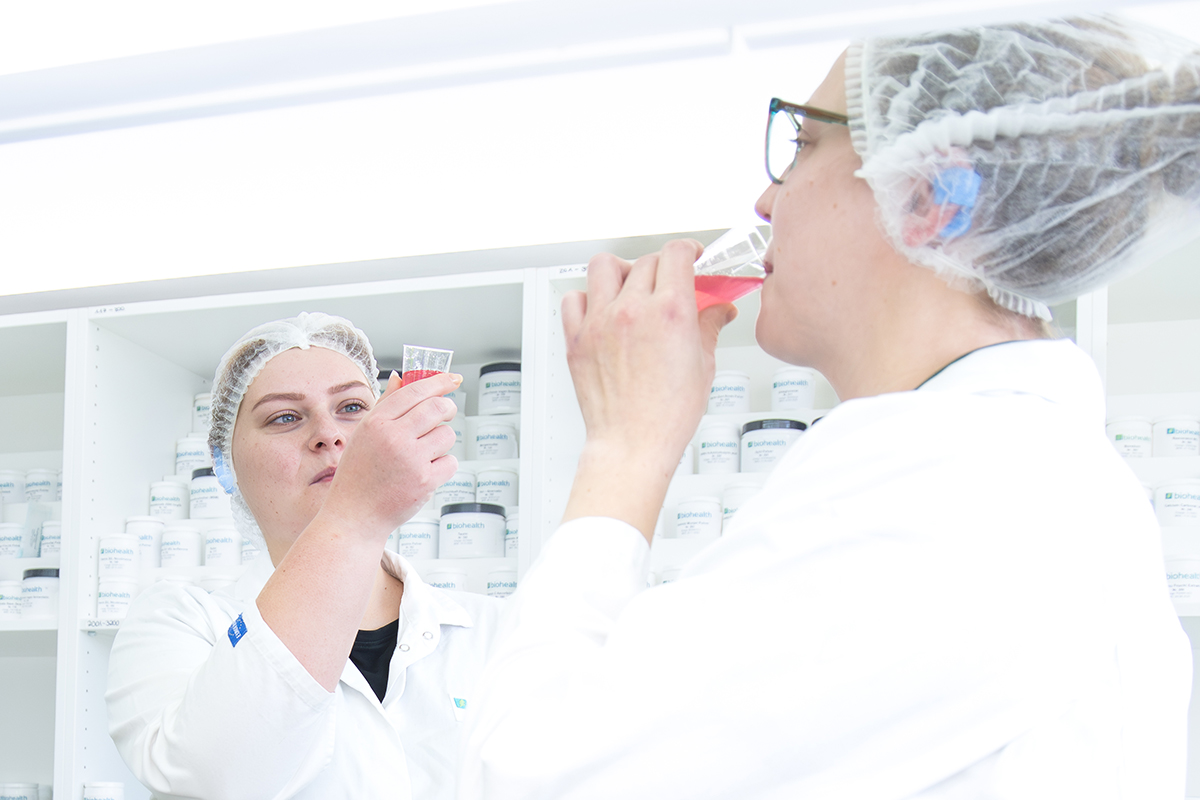
The flavour suffers

Colourful foods have their own distinct flavours; for example, beetroot tastes slightly earthy in large quantities, whilst spirulina has a rather seaweed-like flavour. However, this is particularly noticeable at higher concentrations.

Our Solution

We test the smallest possible amount required to achieve the desired colour without adversely affecting the taste.
Challenge 3:
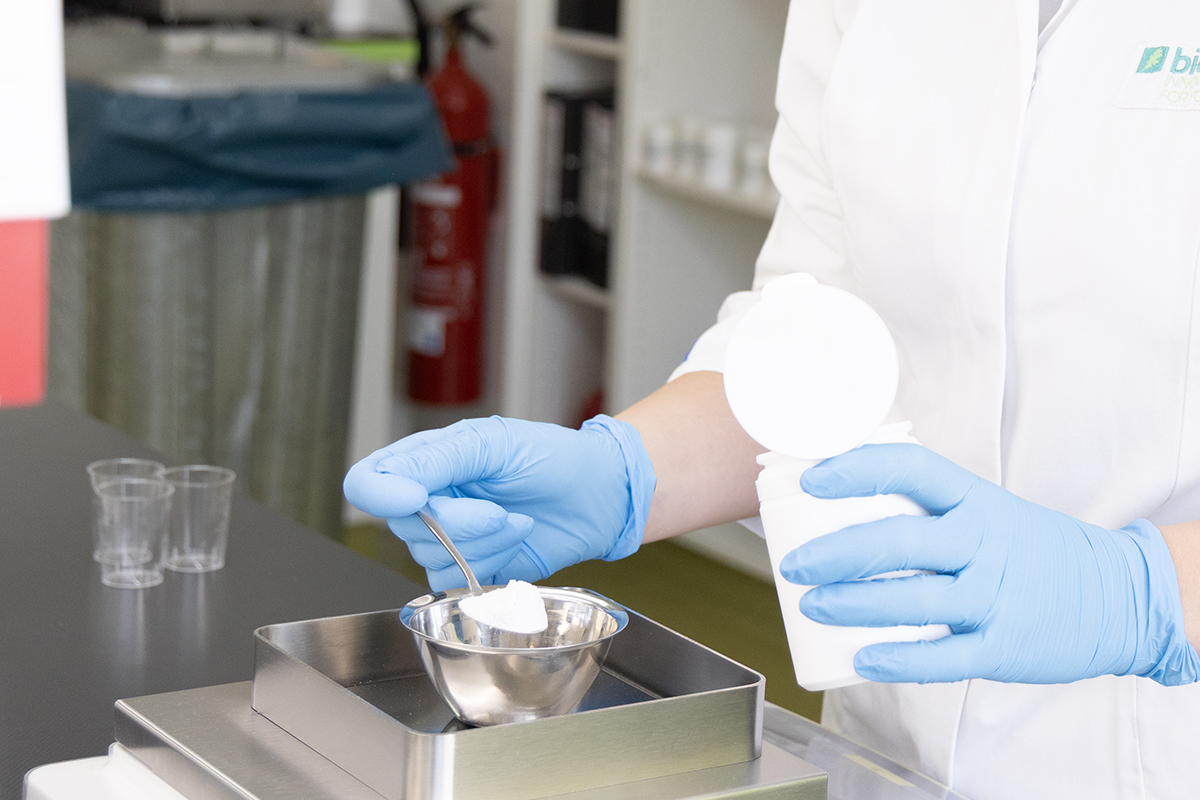
The powder clumps together

An often underestimated issue. Beetroot juice powder, for example, can be hygroscopic. Depending on the quantity used and the rest of the recipe’s ingredients, this may lead to the powder forming lumps.

Our solution

Here, too, we test the smallest possible quantity required to achieve the desired colour shade without adversely affecting the consistency. In addition, our laboratory team carries out stability and caking tests to identify any problems at an early stage.

Why procurement and product development must work hand in hand

Even the best formula is of little use if the right raw materials are not reliably available. That is why Biohealth’s procurement and product development teams work closely together.

Our procurement department assesses, amongst other things, the quality of raw materials, their availability, supply chains and their suitability for different applications. Forward-looking procurement is crucial, particularly for raw materials that are currently very popular, such as matcha, ube and blue spirulina.

More on the topic of procurement

Frequently asked questions about natural colourings in dietary supplements

The choice of natural colourant depends on the desired flavour, the dosage form and the product matrix. Beta-carotene is frequently used for yellow and orange shades, whilst beetroot provides intense red tones. Matcha produces a light green, green spirulina is particularly suitable for ‘greens’ products, and blue spirulina enables striking blue tones. Ube offers natural shades ranging from blue to violet. In the development of dietary supplements, these raw materials are often combined to achieve specific shades and optimum stability.

Natural colourants can be sensitive to external factors. Factors such as pH, acidity, heat, light or certain ingredients in a formulation can cause the colour to change during manufacture or storage. For this reason, simply selecting a suitable raw material is often not enough. In product development for white-label dietary supplements, we test various dosages, combinations of raw materials and formulation adjustments as early as the sample phase to ensure a solution with the greatest possible colour stability right up to the end of its shelf life.

Yes. As a natural colouring agent, beetroot not only imparts an intense red colour but also has a distinctive flavour of its own. Particularly when used in larger quantities, this can come across as slightly earthy. That is why, right from the development stage, we take care to select the lowest possible dosage that achieves the desired shade without adversely affecting the flavour of the dietary supplement. In this way, natural colours, sensory properties and product quality can be optimally combined.

Caking is one of the most common challenges faced with powdered products containing natural colours. Some colouring foods, such as beetroot powder, are hygroscopic and can absorb moisture. This increases the risk of the powder caking during storage. To prevent this, we carefully coordinate the selection of raw materials, dosage and formulation. In addition, our laboratory team carries out stability and caking tests to identify potential risks at an early stage and optimise the formulation for reliable production and shelf life.